

Customer expectations keep rising in every market. Great customer service matters, and live chat lets your business reply fast, right on your website or app.
Consumers want quick and personalized support, and sometimes, they don’t have the patience for emails or the time for phone calls. By offering live chat support service, you can engage with customers in real-time, which raises customer satisfaction and brand loyalty.
Read on to learn what live chat is and how it can improve your customer service.
- Live chat services allow businesses to engage with customers in real time through text-based messages to assist consumers through the customer lifecycle.
- You can utilize live chat features like real-time communication, automation, co-browsing, and integration to enhance customer engagement and satisfaction.
- Businesses can implement live chat support service through in-house live chat teams, AI technology, or outsourcing to specialized service providers.
TLDR:
- Live chat lets you answer customers in real time via text, on your website or app
- Gartner expects live chat to surpass phone and email as the top support channel by 2027
- One agent handles multiple chats at once, so you need fewer staff to cover the same volume
- You can pair AI chatbots for routine questions with a small human team for complex issues
- Magic handles live chat outsourcing with trained agents, no office or equipment needed
What is live chat?
Live chat services allow your business to interact with its customers in real-time through text-based messages. It uses live chat software or apps that let your business message website visitors or app users instantly.
As a component of customer service, live chat allows your business to provide tailored support, answer queries, resolve issues, and guide consumers through the customer lifecycle.
Live chat is becoming a top support channel in 2026
In an August 2025 Gartner survey of 265 leaders, live chat and self-service were expected to pass phone and email as the most valuable customer service technologies by 2027.
With 2027 a few weeks away, chat is where many customers now expect quick answers. A business that answers chats fast can close more sales and keep more customers.
4 key features of live chat services
Live chat support comes with four features that help you give customers better service:
Real-time communication
Live chat support lets your business talk with customers instantly, in both directions. It leads to quick and effective resolutions to customer queries.
For example, a customer needs help choosing the right plan for a service. They can easily connect with a customer service representative via live chat to get personalized recommendations which leads to a satisfied purchase.
Automated chatbots and AI assistants
Not all businesses need to provide 24/7 customer service live chat, but it’s a great feature to have. To do this, you can rely on automated chatbots and AI assistants to augment your human support team without hiring more people.
These live chat tools can handle simple queries, provide basic information, and even perform automated tasks such as managing your support ticketing system. Popular options include Hubspot Service Hub and Freshdesk.
File sharing and co-browsing
Live chat services can do more than text. Many include file sharing and co-browsing features, so agents can solve problems faster.
These features work well for tech and software companies. Your agents can share documents and images, or browse a website together with your customers.
For example, if a customer can’t set up a software app, a live chat agent can ask to see the customer’s screen and walk them through each step until the app works. With live chat, a live chat agent can request access to her screen, sharing step-by-step instructions and visuals to resolve the problem effectively!
CRM and support system integration
Live chat can connect with customer relationship management (CRM) and support systems. This integration helps your business store, manage customer interactions, and maintain conversation histories to provide tailored assistance. It also helps you gather valuable data for analytics and future customer experience improvements.
4 benefits of live chat for your business
Now that you know the answer to “What is live chat,” let’s look at the advantages this type of customer service can give to your business. Here are the key benefits live chat customer service gives your business:
Live chat raises customer satisfaction
Live chat lets your business engage with customers proactively, which can increase customer satisfaction. By providing instant support and tailored solutions, you can build stronger customer relationships that lead to loyalty and repeat business.
Live chat cuts response times
Customers who wait too long for an answer often buy somewhere else. Live chat lets you reply in seconds, so they get help while they’re still on your site, instead of getting frustrated or looking for another business.
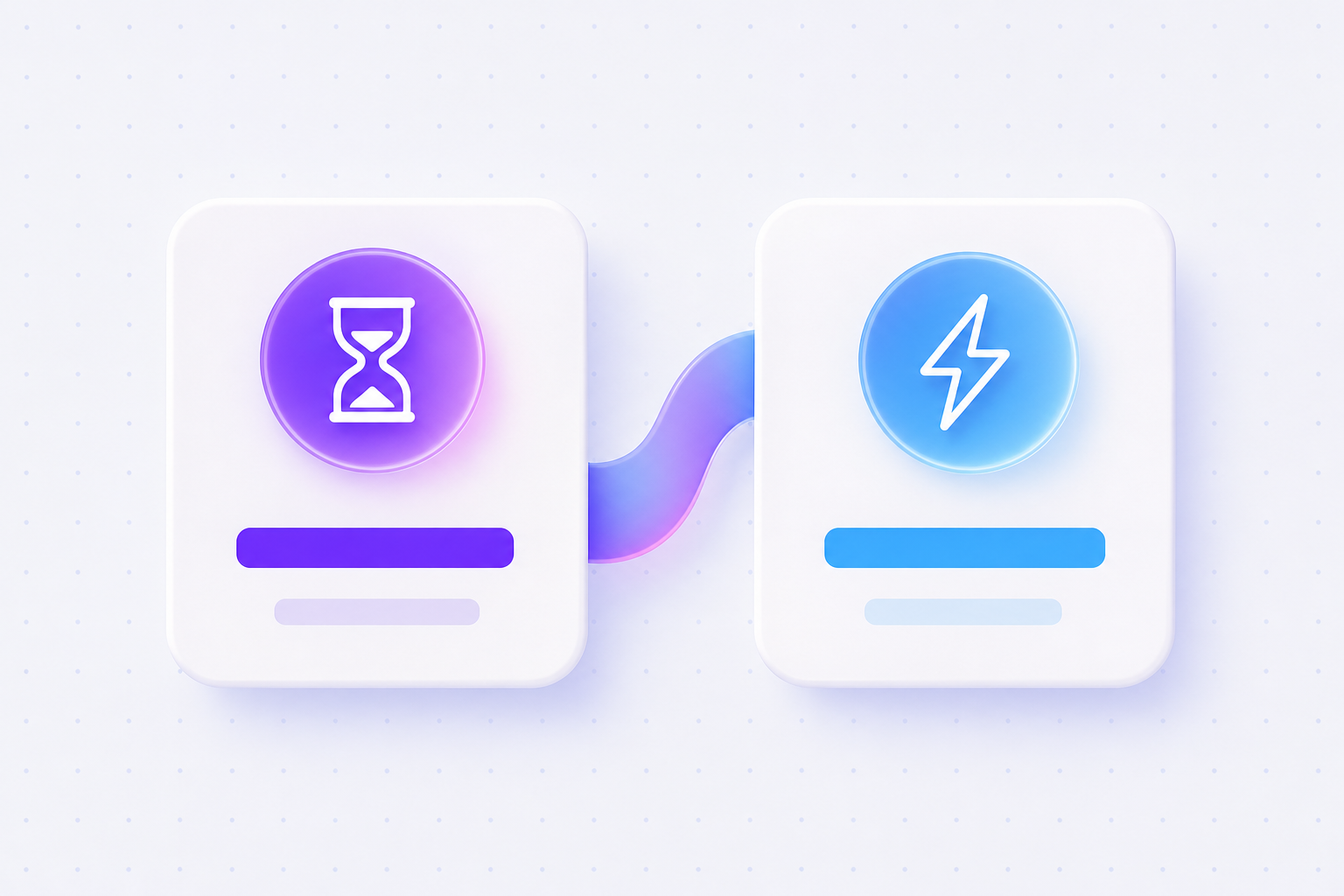
Chart source: SuperOffice live chat statistics
Live chat lowers support costs
Live chat can cut your support costs. Chatbots answer routine questions while a smaller team of people handles the harder issues, so you spend less on staff and get more done.
Personalized, real-time customer support
You can tailor responses and recommendations by analyzing chat transcripts and customer data, creating a more personalized customer experience. It’s also about identifying customer pain points and solving them before they even ask.
3 ways to run live chat support
Now that you’re ready for your live chat solution, let’s look at the options. Here are three common ways to set up live chat:
Approach | Cost | Setup speed | Best for |
|---|---|---|---|
In-house team | Highest: staff, office, equipment and training | Slowest | Businesses that want full control |
Automation and AI | Low cost per chat | Fast | Routine, repetitive questions |
Outsourcing | Predictable weekly cost, no office or equipment | Fast | Small teams that want trained people without hiring |
In-house live chat support team
Building an in-house live chat support team involves hiring and training dedicated customer support agents to handle live chat inquiries.
This approach offers complete control to a business over its customer experience but costs the most to set up. Necessary resources and infrastructure include dedicated office space and equipment, onboarding and training, live chat support software, and other customer service tools.
Automation and Artificial Intelligence
Chatbots and other AI tools can answer many chats at the same time. They use machine learning to understand what customers type, so your team can handle more chats without hiring more people.
Source
As AI continues to change the world, chatbots now answer many routine chats on their own. People still handle the chats that need judgment, like complaints or tricky account questions. Pairing AI with human-in-the-loop services gives you both.
Outsourcing Live Chat Systems
Don’t have the resources to build an in-house team or develop AI technology? Outsourcing customer service can help you implement a live chat service. You won’t need to buy office space or equipment, and agents start trained from day one. If chat volume grows, Magic Teams lets you add one full-time assistant at a time, each working 40 hours a week for $540 a week, with Magic 24/7 included for after-hours requests. Magic does the hiring and training for each new assistant.
These live chat agents can handle queries and manage customer interaction data on behalf of your business, so customers get quality support and your internal team has more time. What’s more, you can also offload other channels such as phone, email management, and social media support to customer service outsourcing companies.
Live chat support lets your business exchange text messages with customers in real time, directly on your website or app. A customer types a question, a person (or chatbot) replies instantly, and the conversation is logged so your team can follow up or spot patterns. Most live chat tools connect to your CRM, so every interaction feeds into your customer data.
Outsourcing is usually the faster and cheaper path for small businesses. Building an in-house team means office space, equipment, training, and ongoing management, while outsourcing lets you hand those responsibilities to a team that’s already set up and ready. If your volume grows or your hours need to extend, you scale the outsourced team without hiring.
Yes. The most common approach pairs AI chatbots for routine questions with a small human team for anything that needs judgment, like complaints or account issues. Magic’s human assistants can handle live chat on your schedule, and Magic 24/7 gives you human coverage around the clock for urgent requests without staffing a full team yourself.
One live chat agent can handle several conversations at once, while one phone agent handles one call at a time. Chatbots can answer routine questions without any staff involved. That combination means you need fewer people to cover the same volume, which cuts your labor costs without slowing response times.
If you want someone in place quickly, without recruiting, training, or managing anyone yourself, outsourcing to Magic is the faster route. Magic picks the assistant, trains them before they start, and stays involved with weekly coaching. A full-time in-house hire typically costs more. The US median wage for an executive assistant was $76,590 in May 2025 (BLS wage data), compared to Magic’s Executive Assistant plan at $28,080 a year (Magic pricing).