

As a company scales, leadership bandwidth quickly becomes the single greatest bottleneck to business growth. When founders and executives spend 20 or more hours a week rescheduling delayed meetings and handling other routine admin tasks, high-impact growth goals take a back seat.
Bringing on an executive assistant (EA) turns this administrative friction into operational leverage, making sure your business progress never stalls.
So, what is an executive assistant? And what does an executive assistant do to achieve that level of impact?
An executive assistant (EA) is a multi-talented professional who provides high-volume administrative and operational support to business leaders and key decision-makers. Acting as a true strategic right hand, an EA manages complex schedules, screens key communication channels, coordinates projects, and resolves operational roadblocks before they ever reach your desk.
By taking full ownership of high-volume logistics, EAs ensure executive focus stays rooted strictly where it drives the highest ROI.
Understanding the Role of an Executive Assistant
To fully grasp the role of an executive assistant, you have to look beyond basic clerical work. An EA is a resourceful problem-solver who wears many hats and thrives in dynamic work environments where adaptability is key.
While a general administrative assistant’s primary focus is executing discrete, routine tasks, an EA works closely with executive leadership. They anticipate what your needs are before you even ask, overseeing day-to-day operations as well as managing sensitive information and complex calendar commitments.
The Productivity Multiplier Effect
The core objective of the executive assistant role is to amplify an executive’s overall output by optimizing how their time, attention, and energy are deployed.
Research shows that business leaders spend up to 70% of their workday on repetitive tasks that do not drive business growth. Because an EA costs significantly less to hire than a senior executive, delegating operational execution dramatically improves leadership return on investment (ROI) while keeping full-time headcount low.
Industry data from the U.S. Bureau of Labor Statistics and Global Business Services shows that modern executive assistant responsibilities have expanded far beyond traditional gatekeeping. EAs now serve a wide range of roles, from project managers and research analysts to cross-functional liaisons and crisis managers, making sure organizational priorities stay strictly aligned.
The Shift to Virtual Executive Support
Advances in digital collaboration software have moved many executive assistant duties into remote setups. A remote or virtual EA fulfills the traditional functions of an executive assistant through cloud platforms and across digital communication tools.
By opening your search to remote talent, you access an expansive global pool of experienced professionals who deliver high-level support across time zones without requiring physical office space or hardware overhead.
Executive Assistant Roles and Responsibilities: A Strategic Comparison
Understanding executive assistant roles and responsibilities requires distinguishing between tactical day-to-day executive assistant tasks and overarching strategic operational tasks.
While a general assistant focuses on completing specific assignments upon request, an EA takes proactive ownership of your working environment. They evaluate how daily tasks connect to long-term business goals, managing minutiae so you can lead with clarity.
The table below highlights how tactical EA duties compare to broader strategic EA responsibilities across core business functions:
| Functional Area | Tactical EA Duties | Strategic EA Responsibilities |
|---|---|---|
| Calendar Oversight | Scheduling invites, reserving rooms, and confirming attendees | Protecting executive focus blocks, optimizing daily energy, and preventing calendar overload |
| Communication | Clearing inbox spam, filing messages, and sorting emails | Triaging message priority, drafting responses in your voice, and managing stakeholder expectations |
| Travel Planning | Booking flights, reserving hotel rooms, and arranging ground transport | Building friction-free itineraries that maximize productivity and minimize layover fatigue |
| Meeting Management | Drafting agendas, taking notes, and sending calendar invites | Researching guest bios, tracking assigned deliverables, and enforcing meeting productivity |
| Document Handling | Formatting slide decks, editing spreadsheets, and organizing files | Maintaining file security, structuring digital knowledge bases, and safeguarding brand integrity |
Core Executive Assistant Duties and Responsibilities
While the specific duties of an executive assistant vary based on industry and company stage, 13 key functions define and EA’s role:
1. Schedule and Calendar Management
Managing time sits at the very foundation of what executive assistants do. An EA structures your daily, weekly, and monthly routines so you spend maximum hours on high-impact strategic work.
An experienced EA analyzes your working habits to eliminate scheduling conflicts and protect critical focus blocks. Their primary schedule management duties include:
- Time Blocking: Structuring daily calendars to lock in dedicated periods for deep work, strategic planning, and uninterrupted leadership thinking
- Conflict Resolution: Identifying double-bookings early and diplomatically negotiating schedule changes with internal and external parties
- Logistical Coordination: Managing meeting links, conference room bookings, and structured appointment setting across international time zones
- Routine Optimization: Reviewing historical calendar data to spot recurring schedule inefficiencies and adjust daily meeting habits
2. Communication Handling and Inbox Triage

Executives face an unrelenting flood of incoming messages across email, messaging apps, and social platforms.
Serving as the initial point of contact for your correspondence, an EA makes sure urgent messages get your immediate attention while lower-priority noise is handled without interrupting your workflow through the following duties:
- Inbox Filtering: Filtering out spam, unsubscribing from mailing lists, and sorting incoming emails into prioritized folders
- Priority Escalation: Flagging urgent communications from key clients, board members, or department leads for personal review
- Drafting and Correspondence: Writing initial response drafts, composing routine replies, and creating reusable email templates that match your personal communication style
- Delegated Inbox Management: Executing structured email management across multiple platforms to maintain inbox zero without leadership intervention
3. Travel Planning and Coordination
Planning business trips involves dozens of small details that can easily pull your focus away from high-level company priorities. With the help of an EA, you can make end-to-end travel preparations more easily by handling these travel coordination duties:
- Itinerary Construction: Creating detailed master itineraries that map out flight schedules, hotel reservations, transit details, and local contact numbers
- Logistics Bookings: Researching and booking flights, ground transportation, lodging, and client dining reservations
- Preference Tracking: Documenting your preferred airlines, seat choices, hotel chains, and dietary requirements for consistent booking
- Documentation and Compliance: Managing passport renewals, visa applications, customs forms, and corporate travel expense tracking
4. Meeting Coordination and Facilitation
An EA supports the entire meeting lifecycle to avoid wasting your and your team’s time on unprepared materials and unstructured sessions. They ensure that every session is brief, purposeful, and fully actionable by taking on the following responsibilities:
- Agenda Preparation: Gathering discussion topics from participants to build and distribute structured agendas prior to meetings
- Briefing and Research: Compiling background context and dossier summaries so you enter every meeting completely prepared
- Minutes and Action Item Tracking: Recording key decisions and documenting assigned action items during executive sessions
- Post-Meeting Follow-Up: Distributing post-meeting summaries and setting task reminders on project boards to hold teams accountable
5. Document Preparation and Information Management
Clear, secure information flow is necessary for making sound business decisions. But when your time and attention are better spent on growing the business, an EA can step in and draft, edit, organize, and protect core company documents for you.
By learning your preferred formatting and brand guidelines, an EA creates polished materials with minimal oversight. Their document handling duties include:
- Executive Formatting: Formatting slide decks, memos, spreadsheets, and reports to conform strictly to company brand standards
- Proofreading and Copyediting: Reviewing written materials for precise grammar and clarity before public release
- Digital Filing Architecture: Structuring cloud and local drives properly so teams can locate documents instantly
- Security and Confidentiality: Managing file permissions and maintaining secure digital archives for sensitive company records
6. Information Research and Market Analysis
Conducting targeted research is one of the highest-value executive assistant job duties. Founders and executives frequently need quick, accurate research to evaluate vendors, assess industry trends, or enter new markets.
When you need help in developing actionable executive briefs, an EA can assist you in synthesizing raw data into practical information. They can also help you by performing:
- Vendor and Tool Audits: Comparing software tools, service providers, or contract terms based on pricing and other factors
- Competitive Intelligence: Monitoring competitor announcements and market shifts to compile digestible updates
- Venue and Event Canvassing: Sourcing locations and contract terms for off-site retreats or client dinners
- Contextual Summaries: Condensing long reports and raw data sets into clear executive bullet points
7. Project Management and Coordination
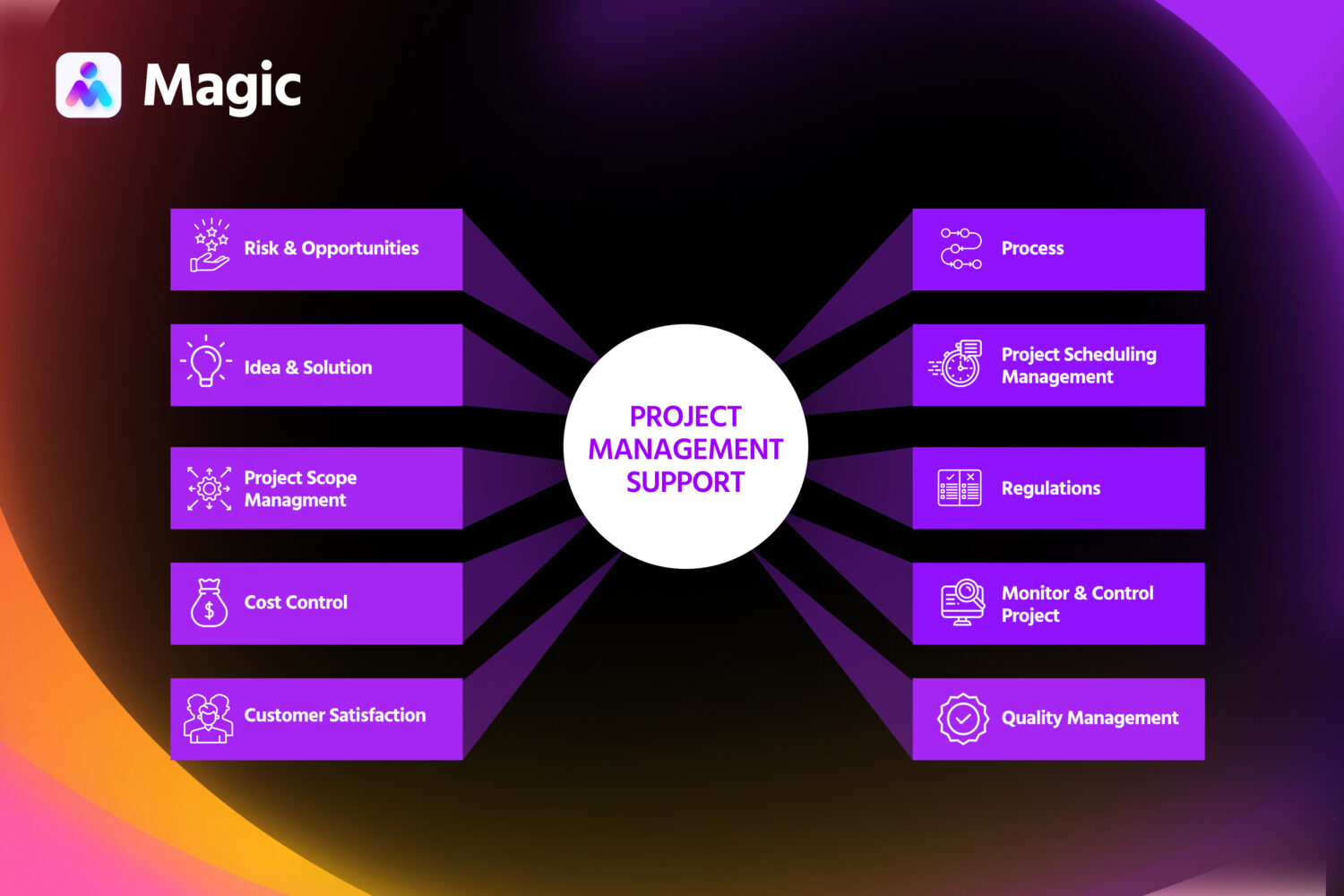
Senior leaders routinely oversee complex initiatives involving multiple departments. An EA acts as an operational project manager, tracking task progress and maintaining momentum across cross-functional teams. Their project coordination duties include:
- Milestone Tracking: Monitoring task deadlines and project status across platforms like Asana, Trello, Notion, or Monday.com
- Office Staff Oversight: Directing junior administrative staff or remote contributors to ensure daily operational alignment
- Resource Allocation: Assisting leadership in assigning personnel, tracking project budgets, and coordinating software access
- Status Reporting: Assisting leadership in assigning personnel, tracking project budgets, and coordinating software access
8. Task Delegation and Follow-Up
Delegating work effectively requires ongoing oversight to ensure tasks reach completion without leadership micromanagement. But when you do not have the capacity for delegation, an EA can act as your central operational hub, routing tasks to the right team members and following up on their progress. They can also take care of:
- Bottleneck Identification: Directing ad-hoc executive requests to the appropriate team members based on capacity and expertise
- Central Contact Point: Serving as an accessible liaison for staff inquiries, filtering unnecessary requests away from executive focus
- Accountability Tracking: Verifying completed deliverables against quality standards before presenting final outputs for executive sign-off
9. Relationship Building and Online Presence Management
Maintaining strong connections with clients, investors, board members, and partners is a core component of building long-term business growth.
EAs leverage high emotional intelligence to cultivate positive ties and manage your professional online presence. Their relationship management duties include:
- Stakeholder Tracking: Maintaining detailed records of key contacts, professional milestones, birthdays, and personal preferences
- Corporate Gifting: Ordering and sending holiday gifts, congratulatory notes, or thank-you tokens to strategic partners
- Digital Engagement: Managing professional social profiles (such as LinkedIn), proofreading content, and scheduling routine network updates
- Diplomatic Communication: Handling internal and external interactions with professional courtesy to build trust and defuse minor conflicts.
10. Problem Solving, Crisis Management, and Decision Support
The EA role blends routine decision support with proactive risk mitigation when obstacles arise. While leaders focus on long-term vision, they can assist you in managing crises that threaten to stall your day-to-day productivity. They can perform:
- Immediate Troubleshooting: Resolving sudden operational hiccups (such as last-minute flight cancellations or software outages) without interrupting the executive
- Decision Support: Serving as a discreet, knowledgeable sounding board when leadership evaluates operational alternatives
- Resource Mobilization: Tapping internal and external contacts quickly to secure emergency technical help, legal advice, or extra project personnel
- Risk Mitigation: Spotting operational vulnerabilities early and taking preemptive action before small glitches turn into major business disruptions
11. Event Planning and Coordination
Organizing corporate off-sites, board meetings, and team retreats requires managing dozens of moving parts simultaneously. An EA can support event logistics behind the scenes so leaders can focus entirely on event messaging and high-level networking.
Their event planning duties include:
- Vendor Management: Contracting with caterers, venue managers, AV specialists, and other vendors to secure cost-effective event services
- Guest Logistics: Managing RSVPs, dietary needs, hotel blocks, and transportation arrangements for event attendees
- Budget Tracking: Allocating event funds across line items and monitoring real-time spending against designated budgets
12. Financial Management and Budgeting
An EA’s financial management duties can span a wide range of financial tasks, from basic bookkeeping to budget monitoring. These tasks involve tracking executive expenses and managing financial paperwork, which require strict organization and discretion to complete.
Although company financials are handled by industry professionals and specialists, EAs can offer their assistance in this aspect by overseeing localized financial workflows to keep spending strictly aligned with departmental targets.
Here’s a closer look at their financial management duties:
- Budget Monitoring: Tracking project or departmental spending against approved quarterly budgets
- Expense Reporting: Collecting receipts, categorizing credit card transactions, and preparing expense summaries for fast reconciliation
- Representation Budgets: Managing representation budgets allocated for client dining, executive travel, and team perks
- Basic Bookkeeping: Performing essential data entry, invoice logging, and document organization before routing files to primary finance teams
13. Legal and Compliance Oversight
Keeping corporate entities aligned with regulatory requirements requires meticulous documentation and organized archives. EAs maintain clean record systems to ensure the business is always prepared for audits and legal filings.
Their compliance oversight duties include:
- Record Archiving: Organizing corporate governance documents, NDA registries, contracts, and board minutes year-round
- Compliance Deadlines: Tracking state and industry filing windows for business licenses, annual reports, and regulatory updates
- Tax Season Assistance: Compiling vendor forms and financial records ahead of tax preparation windows
- Contract Administration: Managing signature queues for legal agreements and tracking upcoming vendor contract renewals
Executive Assistant vs. General Virtual Assistant: Key Differences
When evaluating administrative support options, business leaders frequently use the terms “executive assistant” and “virtual assistant” (VA) interchangeably. On the surface, both roles use digital platforms to relieve operational drag, making both roles appear similar. But upon closer inspection, they perform vastly different roles within your organization.
A general virtual assistant is a task-focused specialist who executes discrete, repeatable workflows based on step-by-step guidelines. Rather than taking broad operational ownership, a general VA handles specific administrative tasks, such as:
- Updates CRM records and maintains clean digital spreadsheets across your databases
- Responds to routine customer inquiries and tracks order status updates
- Schedules pre-approved social media posts and monitors audience comments across platforms
- Categorizes recurring invoices and prepares simple financial transaction summaries
- Researches pricing models or evaluates vendor alternatives based on defined parameters
While a general virtual assistant delivers valuable execution on defined tasks, an executive assistant operates with proactive ownership and strategic alignment. Instead of waiting for step-by-step instructions, an EA acts as an executive right hand, anticipating scheduling conflicts and resolving operational bottlenecks before they disrupt leadership focus.
| Operational Feature | General Virtual Assistant (VA) | Executive Assistant (EA) |
|---|---|---|
| Primary Scope | Executing discrete, task-based assignments | High-level executive support and proactive operational ownership |
| Autonomy Level | Moderate; relies on step-by-step SOPs and instructions | High; exercises independent judgment and strategic gatekeeping |
| Communication Role | Handles standard inquiries and template messaging | Manages inbox triage, C-suite messaging, and stakeholder relations |
| Problem-Solving | Resolves localized, task-specific issues | Manages high-stakes operational crises and provides decision support |
| Core Value | Offloading repetitive, daily operational workflows | Amplifying executive output and multiplying leadership ROI |
Elevate Your Operations With Professional Executive Support
Building a scalable operational foundation starts with matching your executive needs with top-tier administrative talent.
At Magic, we make this process seamless by sourcing, vetting, and matching business leaders with highly skilled virtual assistants tailored to their operational requirements. Whether you need help with email triage, calendar management, or cross-departmental coordination, our flexible hiring model delivers qualified support in as little as 72 hours.
Discover how our flexible executive assistant services can help you clear operational bottlenecks, scale delegation, and reclaim your valuable time.