


You didn’t start your business to spend your weekends staring at a blinking cursor, trying to force out another blog post or newsletter. Yet as your company grows, the demand for high-quality, consistent content inevitably becomes an exhausting, around-the-clock operational burden.
Your website needs fresh articles for search engine optimization (SEO). Your email list expects a weekly newsletter. Your social media channels require daily updates. The problem starts when you attempt to scale this output while managing the rest of your business.
True operational freedom requires moving from an owner-operator to a strategic leader. Integrating a content writing virtual assistant into your workflow is the highest-leverage way to achieve genuine offloading, allowing you to scale your marketing efforts without sacrificing your sanity or your brand’s standards.
Why content consistency breaks down without dedicated support
Most independent founders and marketing teams underestimate their content workload because it happens in fragments. You draft an email newsletter while waiting for a meeting to start, or you quickly write a social media caption in line at the coffee shop.
When you aggregate those fragments, the writing workload forms a heavy infrastructure within your business. If your publishing schedule drops, your web traffic stalls. If newsletter delivery is delayed, the audience experience sours and lead generation dries up.
Without dedicated support, content consistency breaks down in three predictable ways:
- Inconsistent posting cadence: You publish three articles in one week when you feel inspired, and then the blog goes silent for two months when you get busy with client work.
- Drifting brand voice: When content creation is scattered across different team members who are just trying to get it done, the tone of your brand fractures. One post sounds academic, while the next sounds overly casual.
- Rushed copywriting: When writing is squeezed into your spare time between other pressing responsibilities, the quality drops. You stop researching deeply and start relying on generic statements just to hit publish.
We see this structural imbalance across various industries. Industry data reveals that professional photographers can spend 80 to 85% of their working week on administrative, operational, and post-production tasks.
Marketers and founders face the same bottleneck when they try to write, format, and edit every piece of content themselves. You’ve simply run out of hours.
What a content writing virtual assistant actually does
A content writing virtual assistant takes ownership of this operational backbone. They manage the recurring digital tasks that keep the content engine moving, returning those lost hours to your schedule.
But when evaluating what a virtual assistant can do for your marketing team, it helps to look at the exact daily workflows they execute. A virtual assistant content writing specialist focuses on:
- Drafting original copy: They take your outlines, bullet points, or rough voice memos and turn them into polished blog posts, newsletters, and website copy that align with your brand voice.
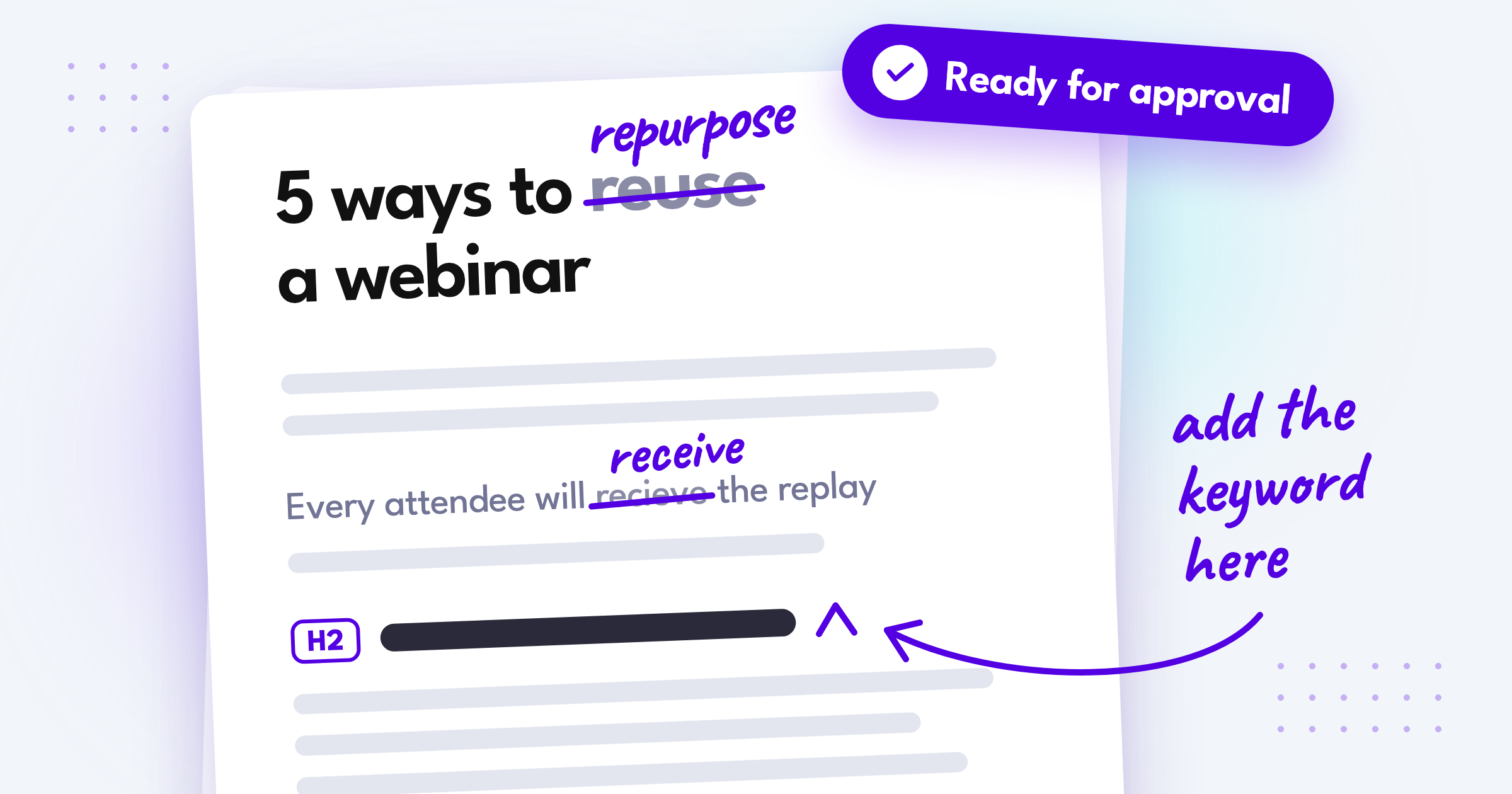
- Content repurposing: A virtual copywriter can take one long-form asset, like a whitepaper or a webinar transcript, and slice it into five shorter blog posts, ten social media captions, and an email drip sequence.
- Editing and proofreading: They act as a second set of eyes, reviewing your team’s rough drafts to catch grammatical errors and maintain stylistic consistency before anything goes live.
- Light SEO optimization: They draft meta descriptions, format headers correctly, source internal links, and ensure primary keywords are naturally woven into the text.
- Maintaining the content calendar: They track what needs to be written, what is currently in draft mode, and what is ready for final approval.
Content writing VA vs. remote editorial assistant: Understanding the difference
While the titles are often used interchangeably, there is a distinct difference between a copywriting virtual assistant and a remote editorial assistant. Understanding this difference can help you decide who to hire.
The content writing virtual assistant
A content writing virtual assistant specializes in drafting original text and creating written assets for your business. This role is fundamentally focused on creation rather than project management or publication logistics.
You hire a content writer virtual assistant when the primary bottleneck is a lack of original text. Their job is to put words on the page. They are the ones writing the 1,500-word blog post, drafting the product descriptions, and brainstorming email subject lines.
The remote editorial assistant
A remote editorial assistant is a virtual professional who manages the publication process, providing support that leans heavily toward project management and quality control rather than drafting original copy.
You hire a virtual content editor when you already have writers (or guest contributors), but you need someone to manage the chaos. They focus on:
- Enforcing deadlines and managing the overall editorial calendar.
- Formatting posts in your Content Management System (CMS) like WordPress or Webflow.
- Ensuring consistency across multiple writers by strictly enforcing the brand style guide.
- Sourcing stock images, formatting alt-text, and scheduling the final publication.
Content writing VA vs. remote editorial assistant: The key differences
The distinct difference between a copywriting virtual assistant and a remote editorial assistant comes down to creation versus management. A content writing virtual assistant generates the actual text, whereas a remote editorial assistant focuses on polishing, formatting, and publishing it.
If your problem is a blank page, you need to outsource content writing. If your problem is a messy, disorganized publishing pipeline, you need an editorial support virtual assistant.
Signs it’s time to delegate your content operations
A robust content workflow is a relentless machine. The moment you hit publish on a newsletter or blog post, the calendar immediately demands the next piece. Managing this continuous pipeline requires much more than just putting words on a page. It involves in-depth research, SEO, CMS formatting, and adapting long-form ideas into short-form social captions.
When you try to squeeze this heavy creative and operational burden into the margins of an already busy day, your overarching marketing strategy suffers. Scaling your content output does not mean staring at a blank screen late into the night. It means offloading the execution to a dedicated professional.
Here are the clear indicators that it is time to bring in remote writing support:
1. The founder or marketer is the bottleneck
Every piece of content requires your direct involvement before it can move forward. If a blog post sits in a Google Doc for three weeks waiting for you to write the introduction, you are blocking your own company’s growth.
2. Your publishing schedule is erratic
You know that search engines and algorithms reward consistency, but you cannot seem to maintain a regular cadence. If your last blog post was published six months ago, it is time to delegate content writing.
3. Growing demands outpace capacity
Perhaps you recently launched a new product line, or you decided to expand from just a blog to adding a weekly newsletter and LinkedIn strategy. Your current team simply does not have the bandwidth to feed all these new channels without sacrificing quality.
4. Brand voice drift
As different employees chip in to write content as a side project to their main jobs, your brand is losing its cohesive identity. You need a dedicated virtual assistant for brand voice management to rein it all back in.
What should stay with the founder or content lead
Delegation requires strict boundaries. You are outsourcing the operational friction of your business, not the creative core. The value your audience pays attention to is your unique perspective, your industry expertise, and your high-level strategy.
Just as certain tasks must remain entirely in the hands of a lead photographer, certain content functions must remain with you. Here’s an example of how responsibilities can be cleanly divided to maintain total control over your brand while achieving true operational freedom:
| Task | Delegated to a content writing/editorial VA | Retained by the founder/marketer |
|---|---|---|
| Strategy & ideation | Researching competitor topics and compiling keyword search volume data. | Deciding the overarching content themes, campaign goals, and unique brand angles. |
| Drafting & creation | Writing the first drafts of blog posts, formatting newsletters, and repurposing long-form content. | Providing the initial subject matter expertise, voice memos, or rough bullet points. |
| Editorial management | Enforcing the style guide, formatting in the CMS, and managing the publication calendar. | Final approval on sensitive messaging, thought-leadership pieces, and brand positioning. |
| Performance tracking | Pulling monthly traffic reports and compiling engagement metrics from published posts. | Analyzing the data to pivot the quarterly marketing strategy. |
You own the craft, while your virtual assistant owns the operations surrounding it.
What to look for when hiring remote writing support
Hiring for a creative, voice-driven role requires a different approach than finding someone for general virtual assistant tasks or bringing on a data entry virtual assistant. When interviewing candidates, look for these specific indicators of success:
- Relevant writing samples: Don’t just look at their grammar; look at their adaptability. A strong copywriting virtual assistant should have portfolio pieces that demonstrate an ability to write in different tones (e.g., authoritative B2B whitepapers vs. conversational B2C emails).
- Editing vs. drafting skills: Test their relevant skills. Give them a raw, messy paragraph and ask them to edit it for clarity and brand voice, rather than just asking them to write something from scratch.
- Familiarity with your CMS: A great writer who doesn’t know how to navigate WordPress or format a Mailchimp campaign will still create an operational bottleneck. Look for basic technical proficiency.
- Ability to follow guidelines: The best remote content writers and editorial assistants can work from established brand guidelines rather than needing heavy direction on every single piece. They should be able to look at your past content and reverse-engineer your style.
Setting up your editorial virtual assistant for success
A virtual assistant for blog writing does not need to be a top-tier industry expert to run the content engine of your business. They need a map of how your specific brand operates. Setting up this framework is a one-time investment that pays off in hours of recovered time for every future publication.
To build a delegable content system, follow these implementation steps:
1. Build the brand template library
Document your preferred language, formatting rules, and structural guidelines. Write out your standard templates for how a blog post should be structured, how an email newsletter should be formatted, and what a social media caption requires. This structured framework allows your assistant to move fast while maintaining your exact standards of service.
2. Create a comprehensive style guide
If this information lives entirely in your head, you cannot effectively offload these tasks. Create a document that outlines your brand’s tone of voice. Do you use emojis? Do you prefer short, punchy paragraphs? Are there specific industry terms you avoid? A style guide is the ultimate tool for a virtual assistant for brand voice consistency.
3. Map the content journey
Write down the sequence of events from the moment a content idea is generated to the moment the final post is published. Detail what happens, which software is used, and who is responsible for each step.
4. Provision secure software access
Use a password manager to grant your assistant secure access to your CMS, email marketing platform, and social media scheduling tools. Establish a rigid file naming convention so your assistant organizes cloud files how you expect to find them.
Round-the-clock and team-based support
While most businesses do fine with a single dedicated writer working standard hours, there are scenarios where your content demands might require broader coverage. If you run a global brand publishing news across multiple time zones, or if you manage content teams at busy marketing firms, you might experience overflow capacity that a single writer cannot handle.
In these instances, expanding beyond one dedicated assistant to a team-based model can provide round-the-clock support. This ensures that while one assistant is drafting a blog post in your morning time zone, another is formatting and publishing the newsletter during your overnight hours. It provides absolute consistency, regardless of how heavy the publishing schedule gets.
Scale your content engine with Magic
Breaking out of the operational bottleneck requires a look at how you allocate your daily hours. Expanding your business means letting go of the tasks that do not require your direct involvement.
By bringing on dedicated remote support, you regain time to focus on acquiring new clients, elevating the creative experience, and driving your portfolio’s revenue strategy.
Magic provides vetted, professional virtual assistants who adapt to your company’s tools and workflows. Whether you need to hire a virtual copywriter to draft your weekly articles or an editorial assistant to manage your complex publication calendar, we have the talent to keep your content engine running smoothly.
