
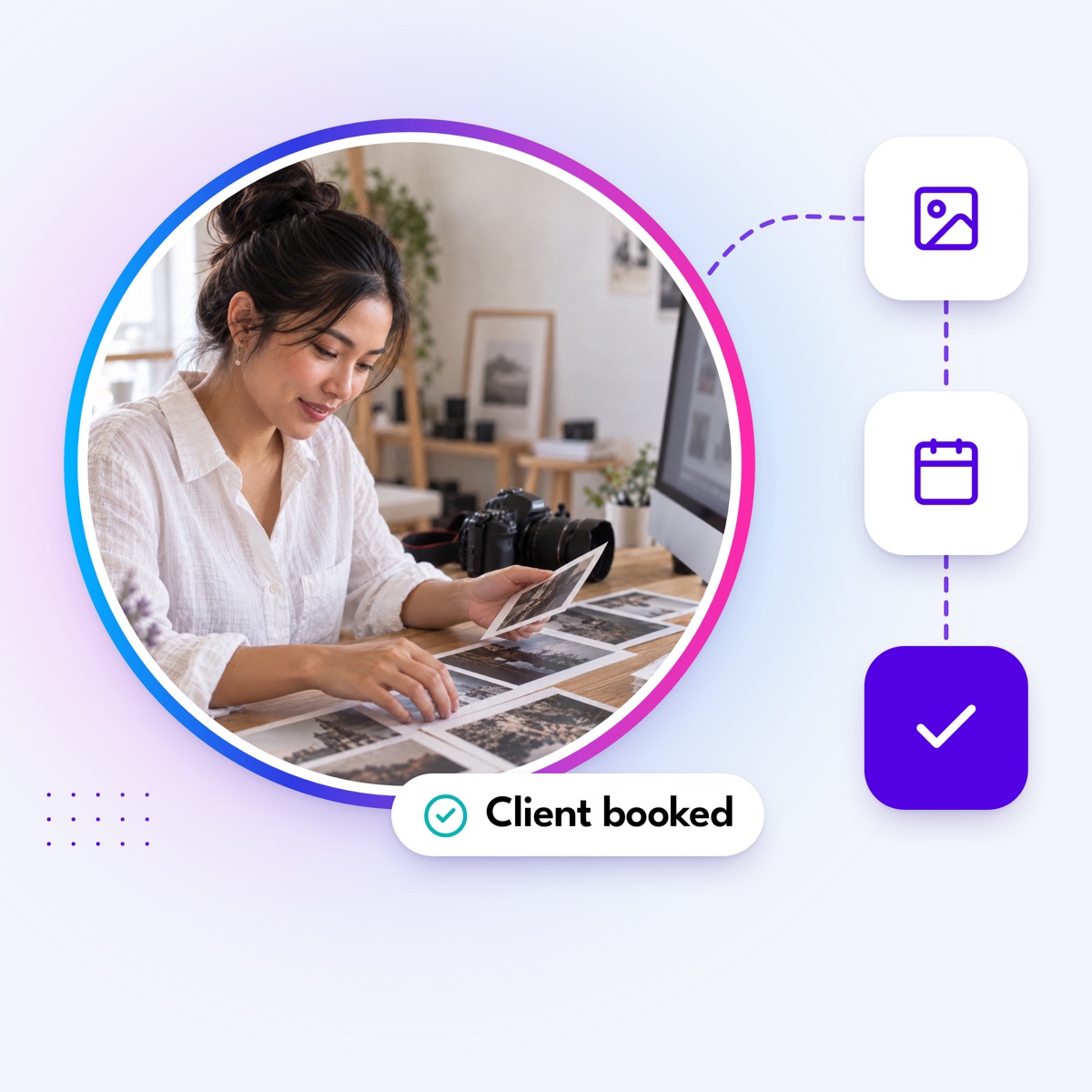

There’s a version of running a creative business that most people imagine before they start, where the work speaks for itself, clients come from referrals, and the calendar stays full of projects worth doing.
Then there’s the version that actually happens. You’re three hours into a design brief when your phone surfaces a revision request from a different client, a payment reminder you forgot to send, and a new inquiry that’s been sitting unanswered for two days.
This isn’t a time management problem; it’s a structural one. Deep creative work and reactive admin require completely different mental modes, and they cannot share the same attention without one degrading the other. When you’re mid-concept on a brand identity, a copywriting campaign, a photo gallery edit, or a video production timeline, context-switching doesn’t just cost you minutes. It costs you the mental state that makes the work worth paying for.
The real cost of running a creative business without support isn’t measured in hours. It’s measured in the quality of work you couldn’t fully commit to and the opportunities you missed while you were busy sending status emails.
The Five Ways Admin Is Silently Killing Creative Businesses
Most creatives don’t realize how much admin is affecting their output until they try to map where the week actually went. The damage tends to show up in five specific ways.
Context-Switching Destroys Your Best Working Hours
Deep creative work requires sustained focus that most creatives only reach once or twice a day. Admin interrupts that state on arrival.
A graphic designer who stops mid-layout to respond to a client’s project status question doesn’t just lose 10 minutes. They lose the thread of the work they were building. The same is true for a copywriter interrupted mid-draft by an invoice query, a photographer pulled out of a gallery cull to confirm a shoot date, or a creative director who spends the first hour of every morning clearing client emails.
Client Communication Falls Through the Cracks
When production is at full capacity, client-facing communication is usually the first thing to slip. Revision requests go unacknowledged for days, new inquiries sit without a response, and follow-up emails stay in drafts.
For a photographer in the middle of editing a wedding gallery, or a copywriter managing three concurrent client campaigns, staying on top of inbound communication while maintaining output quality is genuinely impossible to do well at the same time.
The Feast-or-Famine Cycle Repeats
When you’re deep in active work, lead follow-up stops. When the project ends, the pipeline is empty, and the next few weeks go toward chasing new work instead of doing it.
This cycle is so common in the creative freelance world that most people treat it as an unavoidable feature of the business. It isn’t. It’s what happens when one person is expected to handle both production and business development with no support layer between them.
Revenue Leaks From Slow Invoicing
A copywriter who forgets to send an invoice until a week after delivery delays cash flow by weeks. A videographer who doesn’t follow up on an outstanding payment until a month later has effectively extended a zero-interest loan to their client.
Creative directors managing multiple subcontractors often have payment timelines scattered across several projects with no single person keeping track. The money is owed. It just isn’t being collected efficiently.
Burnout Builds When Everything Depends on You
When you’re the only person responsible for client communication, project management, invoicing, file delivery, new business development, and the creative work itself, the weight doesn’t just accumulate. It compounds.
Burnout in creative businesses rarely announces itself. It shows up gradually as declining enthusiasm for new briefs, slower turnaround times, and a quiet reluctance to take on new clients because the operational overhead already feels like too much.
What a VA Can Handle in a Creative Business
A virtual assistant for creatives doesn’t replace creative judgment. They absorb everything that surrounds them, so the work itself gets your full attention. Here’s what that looks like across each creative practice:
Graphic Designer Virtual Assistant
A graphic designer virtual assistant manages client brief intake, ensuring every project starts with complete information rather than a chain of clarifications that can delay work by days. Revision round tracking is handled in tools like Notion or Dubsado, so clients always know where things stand, and the designer isn’t fielding status questions mid-production.
File organization and final delivery follow a defined naming convention, keeping asset libraries clean and searchable. The graphic designer virtual assistant also coordinates with vendors and print partners, ensuring clients receive final files in the right formats without the designer personally managing each handoff.
Photographers and Videographers
Booking and shoot scheduling run through the VA, which manages calendar availability, sends client questionnaires ahead of sessions, and confirms logistics without the photographer having to track every conversation thread.
Gallery delivery coordination, including client notifications, download link management, and licensing follow-ups, is handled through platforms like Sprout Studio or Frame.io. Equipment rental coordination and content release tracking run as recurring workflows rather than reactive tasks that fall through the gaps during peak editing seasons.
Copywriters and Content Creators
Project intake forms ensure every brief arrives complete before work begins. Editorial calendar management keeps the production pipeline organized across multiple clients and deadlines, and client approval workflows are documented and tracked so nothing waits on a revision sign-off that no one follows up on.
Research briefing, invoice management, and payment follow-ups run consistently. Pitch and proposal admin are handled so that new business development doesn’t stop whenever the writer is heads-down on a deadline.
Creative Directors and Studio Owners
At the studio level, the VA manages team scheduling and capacity tracking, ensuring projects are resourced correctly before they begin. Client onboarding sequences, contracts, and scope change documentation are handled as a standard process in platforms like HoneyBook or 17hats.
Status reporting keeps clients informed without the creative director having to write updates from scratch. Subcontractor coordination, including brief distribution, deadline tracking, and file collection, runs in the background rather than requiring constant manual effort.
The Deep Work Argument: Why Protecting Uninterrupted Time Is a Revenue Strategy
The conversation around VA support usually defaults to time savings. It’s a true argument, but for creative professionals, it misses the more important point.
Output Quality Depends on Working Conditions
Creative output is not consistent across all working conditions. The work a graphic designer produces in four uninterrupted hours is meaningfully better than what they produce in four hours broken up by three client emails, a revision acknowledgment, and a missed invoice.
The same applies to a copywriter building a campaign narrative, a videographer in the edit suite, or a creative director developing a concept for a major client pitch. The best work comes from a state of focus that takes time to enter and is easy to break.
A VA Protects What Clients Are Actually Paying For
A virtual assistant for creatives who handles all inbound client communication, revision acknowledgments, and project status updates during production hours isn’t just freeing up calendar space. They’re protecting the conditions that make the work worth charging premium rates for.
That’s a revenue argument, not just an efficiency one. When clients pay for your creative judgment, they’re paying for your best thinking, and your best thinking doesn’t happen while you’re managing an inbox.
This protection applies across every creative discipline. The craft suffers when the business competes with it for attention, and a VA removes that competition.
Breaking the Feast-or-Famine Cycle With Consistent Back-Office Support
Ask almost any freelance creative about their income pattern and the story sounds familiar. Busy periods are overwhelming. When the work ends, the pipeline is empty.
Why the Cycle Feels Personal But Isn’t
The slow period that follows a busy stretch isn’t restful. It’s anxious, spent pitching and following up and trying to rebuild momentum that should never have been lost.
This tends to feel like a discipline problem, as though you’re not consistent enough at business development or not organized enough to follow up when already stretched. That framing is usually wrong. The actual problem is structural. One person cannot simultaneously produce at full capacity and maintain the business development layer that keeps the pipeline moving.
What Consistent Back-Office Support Changes
A VA breaks this cycle by keeping the back-office layer running regardless of where you are in your project load. While a copywriter is delivering a campaign, the VA is following up with a prospect who went quiet three weeks ago. While a photographer is deep in an editing sprint, the VA is confirming a discovery call that came in through the website.
While a creative director is managing a full production week, the VA keeps the CRM updated, sends check-in emails to warm leads, and ensures no inquiry falls out of the funnel because no one has time to respond.
The feast-or-famine cycle doesn’t end because a creative gets better at business development. It ends when business development stops, provided production is slow enough to allow it.
What a VA Shouldn’t Handle in a Creative Business
A VA does not produce creative work, make artistic decisions, or respond to client feedback that requires creative judgment. A design revision direction, a copywriting note on tone, a photographer’s editing decisions, and a creative director’s concept rationale all fall under the creative. They require craft, taste, and professional experience that a VA is not positioned to provide.
In short: Anything requiring your creative judgment stays with you. Everything that surrounds, supports, and organizes that judgment is fair game for delegation.
When creatives map this out, they find that the operational layer is larger than they expected. Handing it off doesn’t compromise their work, it protects it.
Training a VA on Your Creative Workflow (Without Losing Your Process)
The most common objection for considering a virtual assistant for creatives is that their process is too specific and too personal for someone else to manage. It’s a reasonable concern. Creative businesses run differently from standard office environments, and workflows tend to be more fluid than a formal procedure document can fully capture.
The answer is to document what can be documented and draw clear boundaries around what can’t:
- Start with Client Communication: Write out how you typically respond to a new inquiry, a revision request, and a project completion email. These don’t need to be rigid scripts. They just need to capture your tone well enough that a VA can handle routine communication without it sounding like someone else wrote it.
- Document Your File Structure: Note how projects are organized, your naming conventions, and how final deliverables are packaged for delivery. For photographers, this might mean walking a VA through a folder structure in Adobe Bridge or Lightroom.
- Walk Through Each Process on a Loom Recording: A brief walkthrough of each workflow gives the VA enough context to handle the operational layer accurately. Most workflows stabilize within the first few weeks as the VA executes each process, flags gaps, and the documentation tightens through iteration.
What starts as a rough reference will now become a working system that runs without your constant involvement.
What Changes When a Creative Finally Has Back-Office Support
The difference isn’t always immediately visible in the calendar. The first thing most creatives notice is quieter. They finish a working session without that low-level sense that something else needed attention and didn’t get it.
- The Work Improves: Revision cycles tighten because every round is tracked and followed up on. Clients receive consistent project updates without the creative stopping work to write them. The output improves because the conditions for doing good work are no longer constantly interrupted by the business running around it.
- The Business Stabilizes: The capacity to take on more work grows without a corresponding drop in delivery quality, because intake, approval tracking, and invoicing run smoothly in the background. Onboarding, contracts, and client coordination happen consistently regardless of how many projects are active at once.
- The Business Grows: None of this requires hiring a full-time employee. It requires adding the right operational layer to a creative practice that’s already functioning, and finally letting it function the way it should.
Build a Structure for Sustained Creativity
Creative professionals who scale successfully are not necessarily more talented than those who remain stagnant. They have simply stopped allowing administrative tasks to compete with their craft.
Magic facilitates this transition by matching creative professionals with virtual assistants who are trained to own the operational layer of the business. With Magic, a VA integrates into your specific workflow to ensure the business runs without your constant intervention. By documenting your communication style and file-naming conventions once, you gain a partner who protects your focus and breaks the feast-or-famine cycle.
